

A Decade of Devotion
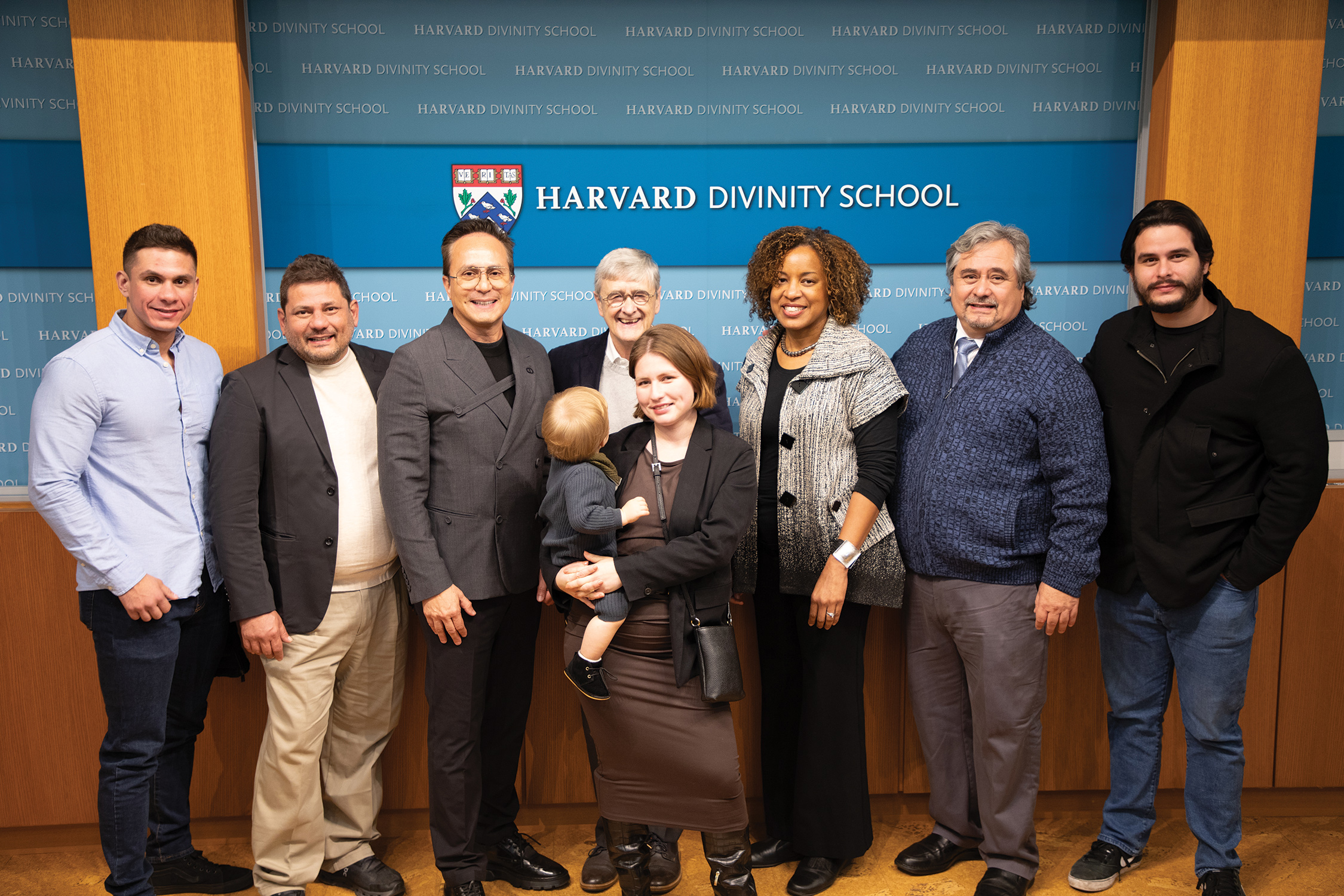
Mario Cader-Frech, MRPL ’24, has honored the School’s commitment to educational programs and initiatives focused on religious literacy in media and entertainment with a gift to name the Cader Room.
Over his career, Mario Cader-Frech, MRPL ’24, has led with social responsibility and impact at the heart of his work—envisioning and directing an extensive portfolio of successful media campaigns and content aimed at connecting young people with their communities through MTV, Nickelodeon, Comedy Central, VH1, and more. As senior vice president of public affairs and social responsibility at Viacom International, he worked on behalf of the United Nations, international nonprofit partners, and private-sector brands to deliver messages that inspired social good.
One unsuccessful proposal—a show about soccer players participating in their respective acts of faith prior to coming together as a team—led Cader-Frech to take an HDS course, where he deepened his knowledge about the importance of religious literacy in media. Throughout his studies, Cader-Frech learned the importance of discerning and analyzing religion through multiple lenses and facets of the human experience. He also realized that what he was learning applied to much more than his personal goals at Viacom, and he wanted to scale these ideas to bring religious literacy from Harvard to Hollywood, where it had the potential to offer more social impact. Taking one single course planted seeds for learning and relationships to flourish at HDS for the next decade.
In 2018, Cader-Frech completed what was then called the graduate certificate of religion and education. Inspired by his time at HDS, he cofounded the DeeperDive project, an initiative that explores the role of religion in entertainment media and provides religious literacy training for media executives. He then deepened his service to the School, becoming a member of the HDS Dean’s Council and offering internships to students through DeeperDive. He also served as a fellow for the religion in public life, media, and entertainment track, and he eventually enrolled in the master’s degree program in religion and public life, lending his expertise and passion to the HDS Film Festival.
Now, Cader-Frech is helping ensure there will always be a place for ideas to flourish at HDS—with a gift to name the Cader Room (previously known as the Sperry Room). In a recent conversation, he spoke with HDS about religious literacy and media, the HDS Film Festival, and what inspired him to honor the School’s commitment to educational programs and efforts focused on bridging religious and cultural divides.
What did you most value about your time as a student here?
When I first took an HDS class in 2015, I was already in my 50s. I was raised to not question or debate religion. I come from a very religious background, and I never thought of religion as anything other than devotional. But in that class, I learned that it is, in fact, something we can discuss; it’s not a sin to talk about religion. That had a huge impact on me—thinking about religion through different lenses in public life. Religion is also anthropological, sociological, historical, and connected to these different contexts. That framework helped me open my mind and my eyes. I found myself having incredible conversations not only at the School, but also with my dad! This was not something we had discussed previously, and I am eternally grateful for this language.
What is important to know about the role religious literacy can play within the ever-evolving media landscape?
Religious literacy is more essential than ever. Religion continues to shape the identities, values, and worldviews of billions of people across the planet. It informs personal ethics, public policy, rituals of life and death, and even the language we use to describe good and evil. Yet, in the media—especially film, television, and news—religion is often underrepresented, misrepresented, or oversimplified; bias often thrives in the absence of knowledge. And so, viewers are more likely to conflate entire traditions with the actions of a few, or misunderstand key differences within faiths.
Religious literacy, especially when embedded into storytelling, can mitigate these biases by illuminating diversity within traditions, showing how beliefs evolve over time, and presenting people of faith as complex, contradictory, and fully realized. Films, series, and news stories can introduce audiences to traditions, rituals, and moral struggles different from their own—and help them find points of connection. In the hands of thoughtful storytellers, these channels can offer ways to hold complexity, dismantle fear, and honor the richness of the human spirit.
Can you tell us about the HDS Film Festival and how it can serve as a learning resource for students?
Since its founding in 2017, the festival has grown from receiving a handful of entries to generating an outpouring of global interest. In 2025, we received 437 high-caliber submissions from 70 countries, and we ultimately showcased 16 films from 14 countries. Three of the submitted films were short-listed for the 97th Academy Awards by the Academy of Motion Picture Arts and Sciences, and two films were by notable Harvard alumni filmmakers. So, there was an exceptional quality and diverse array of perspectives and voices.
As the only film festival of its kind focused on the academic study of religion and film, it provides students, filmmakers, and audiences with a rare opportunity to engage in meaningful discussions about how religious themes are represented and understood through cinema. We teach students how to think about and watch films. But we also understand the extra benefit that directing and making a film can add to that thought process. That’s why this year we’re announcing micro-grants for filmmaking, a new initiative designed to support current HDS students who wish to create short films or a project that explores the intersection of religion, spirituality, faith, and public life. We’re offering this program in direct partnership with the HDS Film Festival to nurture emerging voices in religion and media by providing mentorship and production support to students each academic year.
“Films, series, and news stories can introduce audiences to traditions, rituals, and moral struggles different from their own—and help them find points of connection.”
Mario Cader-Frech, MRPL ’24
Your recent gift to HDS honors the study of religion and media. What does the naming of the Cader Room mean to you?
This room has long been central to Harvard Divinity School’s gatherings, lectures, and classes, a space where ideas and dialogue flourish. It is my hope that the Cader Room will continue to serve as a vibrant hub for learning and engagement—fostering conversations that illuminate the intersections of religion, faith, spirituality, and media in particular. I also envision it as a place that builds awareness of this important field, hosting programs like the film festival and other offerings that bring these themes to life.
This space now bears my family’s name, Cader, serving as a symbol of both the legacy of my father and his ancestors who taught me the importance of the social gospel—the Christian notion of giving back—and their lifelong commitment to applying the principles of justice and charity to better society. Many in my family have dedicated themselves to improving health care for the most vulnerable, establishing hospitals, clinics, and pharmacies that serve with compassion and excellence. I hope to extend that legacy to the sphere of education, with the belief that knowledge is the foundation upon which we can build a better world. And HDS really shaped my heart, my soul, and the way I think today. I act with more awareness of who I am, what I’m capable of doing, and how I can influence or inspire, for good or for bad. This is why I continue to support the School—to give back to a place with the vision of a better world for all.
Banner photo of Mario Cader-Frech by Danielle Daphne Ang.
Dean's Report
Learn more out about Harvard Divinity School’s recent research, teaching, and impact.
