

Letter from Dean Marla F. Frederick
Hello from our beautiful campus on a crisp autumn day. As I reflect on my first full year as Dean here at Harvard Divinity School, I write with deep conviction and steadfast hope for all that HDS has to offer the world. Together, we have navigated yet another unprecedented year—and I continue to be reminded why the world needs students, teachers, and supporters of HDS who protect the promise of education in service of advancing knowledge and honoring our shared humanity.
The intention for this annual publication is to offer a look back on the previous academic year and a view toward the future. It also gives me an opportunity to extend my appreciation to our students, staff, faculty, alumni, and friends. I am deeply grateful to each of you who upholds our School’s commitment to fostering a vibrant, multireligious community where students and scholars come together to research and study a multitude of traditions, explore life’s biggest questions, and find purpose. As I shared with our graduating class in the spring, bridging religious and cultural divides is not easy work, but here at HDS we remain committed to the vision of a just world at peace even when the work is incomplete. Even when the work is difficult—especially then. This is pluralism in action.
In September, I visited the Vatican with HDS and Harvard colleagues. We had been invited to participate in the 2025 World Meeting on Human Fraternity, a gathering the Vatican organized with the intention to “reflect together on what it means to be human today, in an era marked by conflicts, loneliness, new forms of poverty, environmental crises, and challenges related to technological progress. It is an opportunity for dialogue, sharing experiences, and—starting from fraternity—building new ways of hope and shared responsibility.” The event was especially poignant given the recent loss of Pope Francis and the election of Pope Leo XIV, the first leader of the Catholic faith from the United States.
This global summit with scholars, artists, and notable leaders from different countries, faith traditions, perspectives, and lived experiences reaffirmed in me the sacred nature of our work here at Harvard Divinity School: to cultivate a multireligious, intellectual community that honors dialogue across differences. Throughout the spring 2025 semester, the Office for Community and Belonging hosted a series of conversations with this spirit in mind. Through the series “Love Through a Multifaith Lens,” faculty explored teachings on love in Judaism, Buddhism, and Islam, highlighting the pluralism within each tradition. This series—and the many classes, lectures, events, and conversations happening every day at HDS—are vital as we work to heal divisions within our society and build empathy across boundaries and barriers.
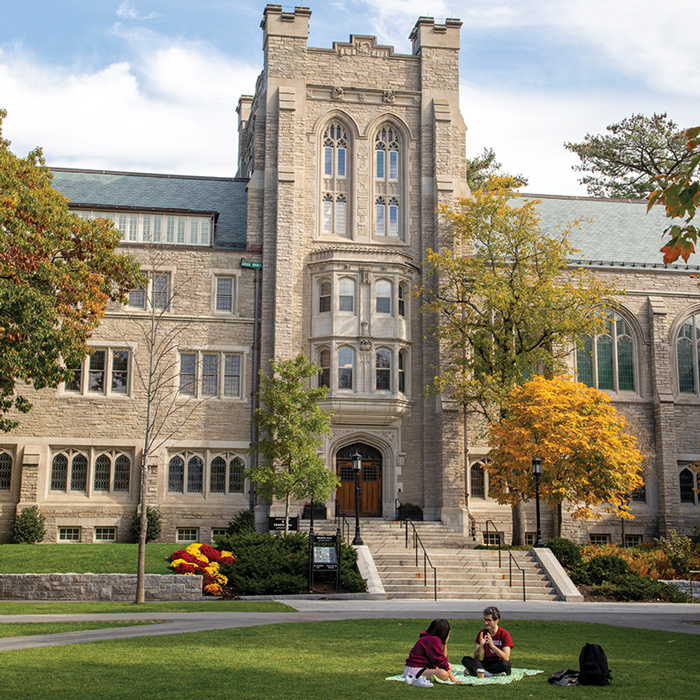
Photo by Kristie Welsh

Photo by Kristie Welsh
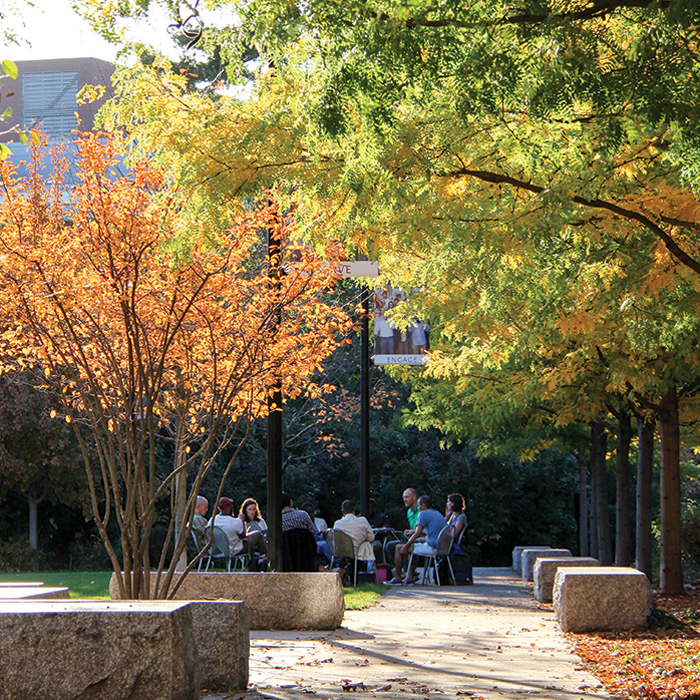
Photo by Kristie Welsh
Recommitting to Our Mission and Vision
At the outset of my deanship, I initiated a strategic planning process in order to chart a path forward for the School. The plan is designed to be adaptable and responsive to the changes and challenges of our time, while strengthening the foundational vision and values that have built our world-renowned Divinity School. Facilitated by Beleza Advisors, a firm dedicated to navigating strategy, vision, and leadership for higher education and the nonprofit sector, this plan outlines key priorities designed to bring the future of the study of religion—and the many intersections of this work—into even greater focus.
Beginning in fall 2024, more than 200 faculty, students, staff, alumni, and Harvard leaders, as well as deans from five peer divinity schools, provided perspectives and input. Through a series of surveys, interviews, and focus groups, participants offered feedback on the School’s strengths, challenges, and opportunities. This intentional process resulted in two major updates for the School: a refined mission statement and a set of strategic priorities to guide our collective work over at least the next five years.

Mission Statement
The long-standing mission statement read: Harvard Divinity School educates students of religion for intellectual leadership, professional service, and ministry.
Over the last two centuries, our multifaith, pluralistic institution has grown in both size and scope. To honor this progress, we have revised our mission statement.
Mission: Harvard Divinity School advances scholarly research on religions around the world and educates students for intellectual leadership, professional service, and ministry in a multireligious environment.
This expansion of our mission statement honors our history while more fully reflecting the breadth and depth of study and research taking place at HDS. Community members expressed strong support for the School’s vision statement, and no changes have been made to that language.
Vision: To provide an intellectual home where scholars and professionals from around the globe research and teach the varieties of religion, in service of a just world at peace across religious and cultural divides.
Strategic Priorities
Focused effort will allow us to address areas of opportunity that emerged from the planning process. Four core priorities are designed to support the School’s mission and vision. More information about each strategic priority is available on our website.
- Advance and strengthen the academic study of religion.
- Fully realize the promise of a multireligious academic environment.
- Prepare students to lead in a multireligious world.
- Enhance HDS’s visibility, reach, and impact.
I would like to thank each person who helped shape this plan. The process evoked a spirit of deep reflection, meaningful dialogue, and collective purpose throughout our community. We will bring this same thoughtfulness and care to our work moving forward.

Dean Marla F. Frederick with HDS faculty celebrating the School’s 210th Convocation in September 2025. Photo by Evgenia Eliseeva
Academic Expertise and Reach
The School’s exceptional faculty and visiting scholars continue to advance knowledge of global religions through robust course offerings, rigorous research, and leadership that spans the academy. The following content throughout the report highlights the range of publications, awards, and events happening across the School.
I would like to acknowledge the scholars who have recently joined our community and those who have been steadfast in their commitment to HDS for decades. During the academic year 2024–25, we welcomed several new professors to the Faculty of Divinity: Nikki Hoskins, MDiv ’12, Assistant Professor of Religion and Ecology; Stephanie Sears, Lecturer on Spiritual Care; and Raúl E. Zegarra, Assistant Professor of Roman Catholic Theological Studies. In July 2025, Rabbi Shaul Magid joined the faculty as Professor of Modern Jewish Studies in Residence, building on the role of visiting professor he held for the past two years.
Additionally, we celebrated two promotions: Mohsen Goudarzi, AM ’14, PhD ’18, is now Associate Professor of Islamic Studies, and Ahmad Greene-Hayes is now Associate Professor of African American Religious Studies. We also have an array of visiting scholars and research associates who bolster our academic offerings each year.
I also want to recognize Diane L. Moore, MDiv ’84, who announced her retirement plans in September 2024 after 24 years of teaching and academic leadership, including establishing the Religion and Public Life (RPL) program. I am grateful to Diane for her service and her expertise in religious literacy. RPL continues under the guidance of Terrence L. Johnson, MDiv ’00, who began as the faculty director this July.
The purpose of Religion and Public Life—to bring the best of HDS scholarship to the wider public in service of a just world at peace—is needed now more than ever. This year’s programming provides opportunities for expanded conversations and inspiration for meaningful action, in and outside the classroom. A series of talks focused on conscious capitalism, for example, illustrates how the study of religion, with ethical teachings offered by different faith traditions, can be a force for good in the world. Our expert faculty scholars, and the many leaders they connect with through their work, hold unlimited potential as we continue to explore, examine, and understand how religion shapes society. I look forward to the future of the Religion and Public Life program and to all the insights, energy, and intellectual excellence our faculty, research associates, and visiting scholars offer the HDS community and the world.
Sadly, our community lost an exceptional scholar this year. We mourn the loss of Francis Schüssler Fiorenza, who died in July 2025 at the age of 84. Francis joined the Harvard Divinity School faculty in 1986 and retired from full-time teaching in 2021, though he continued his work as a research professor. Known as one of the most influential Roman Catholic theologians of our time, his work spanned fundamental theology, hermeneutics, and political theology—reshaping fields and challenging us to think more expansively about theology’s role in the world. Francis embodied the ideals of what theological education can be: rigorous, courageous, and humane. He is survived by his wife, Elisabeth Schüssler Fiorenza, herself a renowned theologian and professor emerita at HDS; his daughter, Sophia Miryam Schüssler-Fiorenza Rose; their family; and the many students, colleagues, and friends whose scholarship, generosity, and vision he shaped.
We owe a debt of gratitude to all our faculty and scholars who seek to illuminate and deepen our understanding of religious traditions and their intersections with every aspect of the human experience. Our work would not be possible without their academic expertise. Thank you to each member of our community called to the time-honored tradition of teaching and learning.
Campus Life
One exciting update from campus is that HDS saw the highest number of applications on record for last year’s admissions cycle—demonstrating remarkable demand by prospective students to study religion in our vibrant, multireligious environment. The 116 students from our incoming class join us from 86 undergraduate institutions. Here is a snapshot of their academic focus areas:
- More than half of the MTS candidates intend to pursue careers in education.
- Nearly two-thirds of the MDiv candidates plan to pursue ministry vocations.
- MRPL candidates join us from a range of fields including film, media, law, government, nonprofit leadership, and the private sector.
HDS students, staff, faculty, visiting scholars, and alumni continue to lead a range of engaging events open to the broader public. In addition to the School’s many community gatherings—such as Wednesday Noon Service and weekly spiritual offerings—campus is often buzzing with lectures, film screenings, musical performances, and more. We welcome attendance at any of our programs and activities shared on the HDS public events calendar.

Billings Preaching Prize Finals, hosted by the Office of Ministry Studies, held at Noon Service in April 2025. Photo by Marisol Andrade Muñoz
Creating Connections Across the University and Around the Globe
Last year, I met with alumni and friends for community teas in Atlanta, Denver, San Francisco, New York, and here in Cambridge. Our powerful discussions covered a range of topics—from addressing the climate crisis and cultivating care for nature, to fostering respectful dialogue across difference, and protecting the promise of multireligious education. I greatly enjoyed meeting community members around the country, and I extend deep gratitude to our dedicated alumni and friends who hosted these vital conversations.

One particularly exciting moment during the Atlanta event: As alumni and friends gathered, many were arriving from Emory University, and we saw the connections between our two institutions illustrated in real time. HDS alumni serve at Emory as the Buddhist, Hindu, and University chaplains, and Jonathan Strom, MTS ’87, is dean of its Candler School of Theology. It was a joy to connect with the Ven. Priya Sraman, MDiv ’17, Pandit Rajeev Persaud, MTS ’24, the Rev. Gregory W. McGonigle, MDiv ’04, and Dean Strom during this trip—and I deeply appreciate how they model multireligious community and the importance of multifaith ministry at Emory and beyond.
While in Atlanta, I had the privilege to join the Rev. Dr. Robert Franklin, MDiv ’78, in conversation for this event. As the inaugural James T. and Berta R. Laney Chair in Moral Leadership at Candler, senior advisor to the Emory University President, and President Emeritus of Morehouse College, he brings his experience as a scholar and a leader to the field in myriad ways. He was recognized by HDS as a Peter J. Gomes, STB ’68 Distinguished Alumni Honoree in 2018; you can read more about his impact in the HDS news story online titled “Leadership by Example.”
I would also like to acknowledge the members of the HDS Dean’s Council for their exceptional engagement and guidance. To those who have recently joined, those who continue to serve with distinction, and those who have concluded years of service—thank you for sharing your time, energy, and expertise with the School. I especially want to recognize R. Thomas (Tom) Stanton, HDS ’68, for chairing the council over the last 12 years and for his continued service as a member. From his time here as a student to his leadership of the Dean’s Council and the Global Task Force, the School has benefited from decades of Tom’s wisdom and support. As he steps down from his role as chair, we are thrilled to welcome Katherine Collins, MTS ’11, into the position. Katherine is head of sustainable investing at Putnam Investments and the founder of Honeybee Capital. As an author, industry leader, and philanthropist, she is well respected for her dedication to sustainable business practices and reconnecting investing with the world it is meant to serve. Building on the strong foundation set by Tom, Katherine is poised to bring the council’s work—and, in turn, our School’s reach—to the next level.

I would like to emphasize one of the many aspects of the School’s work that has created connections across Harvard and around the globe. HDS has a long history of expanding multireligious education—notably with the establishment of the Center for the Study of World Religions in the 1950s. Since then, we have not only broadened our academic fields of study, we have also created foundations for multifaith ministry offerings. Over the last few years, the Office of Ministry Studies has bolstered the Buddhist Ministry Initiative. The network of Buddhist scholars and practitioners created by the groundbreaking initiative has reached international scale. Guided by this success, the School has been expanding and strengthening multifaith ministry resources. This work supports our students by creating more opportunities for teaching and learning, including field education sites dedicated to chaplaincy. Additionally, as the School has seen with the visiting Hindu monastics program, religious leaders who join our community enrich our understanding of pluralism across and within different traditions. I invite you to read more about our plans for expanding this important work by establishing new programs in the Hindu, Jewish, and Muslim traditions that draw on the Buddhist Ministry Initiative model. I welcome conversations about how to support resources dedicated to spiritual care.
(Please see “Expanding Resources for Ministry Studies Across Traditions” for more information.)
Focusing on Collective Impact in the Year Ahead
Focusing our efforts and thinking strategically about our collective impact has been top of mind for me. As the world continues to grapple with overlapping crises—threats posed by climate disasters, health and wealth imbalances, the bane of inequality in both resources and rights, and acts of violence afflicting our nation and regions around the globe—our work has become even more germane. I am grateful for our students, staff, faculty, alumni, and friends who believe in the School’s vision for a world at peace and show up tirelessly to make it so. Each opportunity we create to learn from one another, to share insights across opinions, perspectives, and areas of expertise, illuminates our interconnection and interdependence.
I hope you will feel the same sense of appreciation for our multifaith and multifaceted community as you read the stories featured in this year’s report. From expanding the foundations of knowledge through the Women’s Studies in Religion Program, to exploring Christianity through philosophers like Saint Augustine, to deepening our understanding of love and spiritual care through different traditions, HDS faculty continue to advance and strengthen the study of religion. Furthermore, our students and alumni help us realize the promise of a multireligious academic environment with their leadership, and each of you enhances HDS’s visibility, reach, and impact with your dedicated support.
Thank you for being a part of this vibrant community.
With appreciation,
Marla F. Frederick, PhD
Dean of Harvard Divinity School
John Lord O’Brian Professor of Divinity
Professor of Religion and Culture
Professor of African and African American Studies (FAS)
Dean's Report
Learn more out about Harvard Divinity School’s recent research, teaching, and impact.
