

'Grief is a Story of Love Looking for a Place to Go'
Students and alumni at Harvard Divinity School are transforming how we understand and respond to grief—bringing compassion, community, and new pathways to healing.
It is inevitable that at some point in life, a person will experience a season of sorrow. And yet, few feel comfortable openly discussing death, dying, and the grieving process.
At Harvard Divinity School (HDS), students discover ways to lead with compassion and care in diverse contexts—especially in moments of grieving and suffering. Recently, HDS community members shared their unique perspectives and practices on bringing people into healthier relationships with their grief. Their work highlights some of the ways practitioners at HDS are actively transforming how we understand, honor, and tend to the multifaceted nature of modern grief.
‘Grief Happens Dynamically through the Body’
Grief is both universal and unique: it is a shared human experience, yet it assumes different shapes given the particular circumstances of loss. Because of this, there are common cultural pitfalls—particularly in the West—that can isolate people inside their pain, keeping them stuck in unhelpful patterns. As AmarAtma Singh Khalsa, a Master of Religion and Public Life (MRPL) candidate, has discovered, the path to a transformed relationship with grief runs through the body—a perspective shaped by his work as a board-certified chaplain, ordained Sikh Dharma minister, and grief coach.
For nearly a decade, Khalsa tended to patients as a staff chaplain within a Phoenix, Arizona, hospital system. Working in ICUs and trauma bays, with children in pediatrics, as well as spending time with doctors, nurses, and other administrative leaders navigating the high stress environment of the hospital setting, he began to see and better understand patterns of burnout and the physical manifestations of unresolved and unnamed grief.
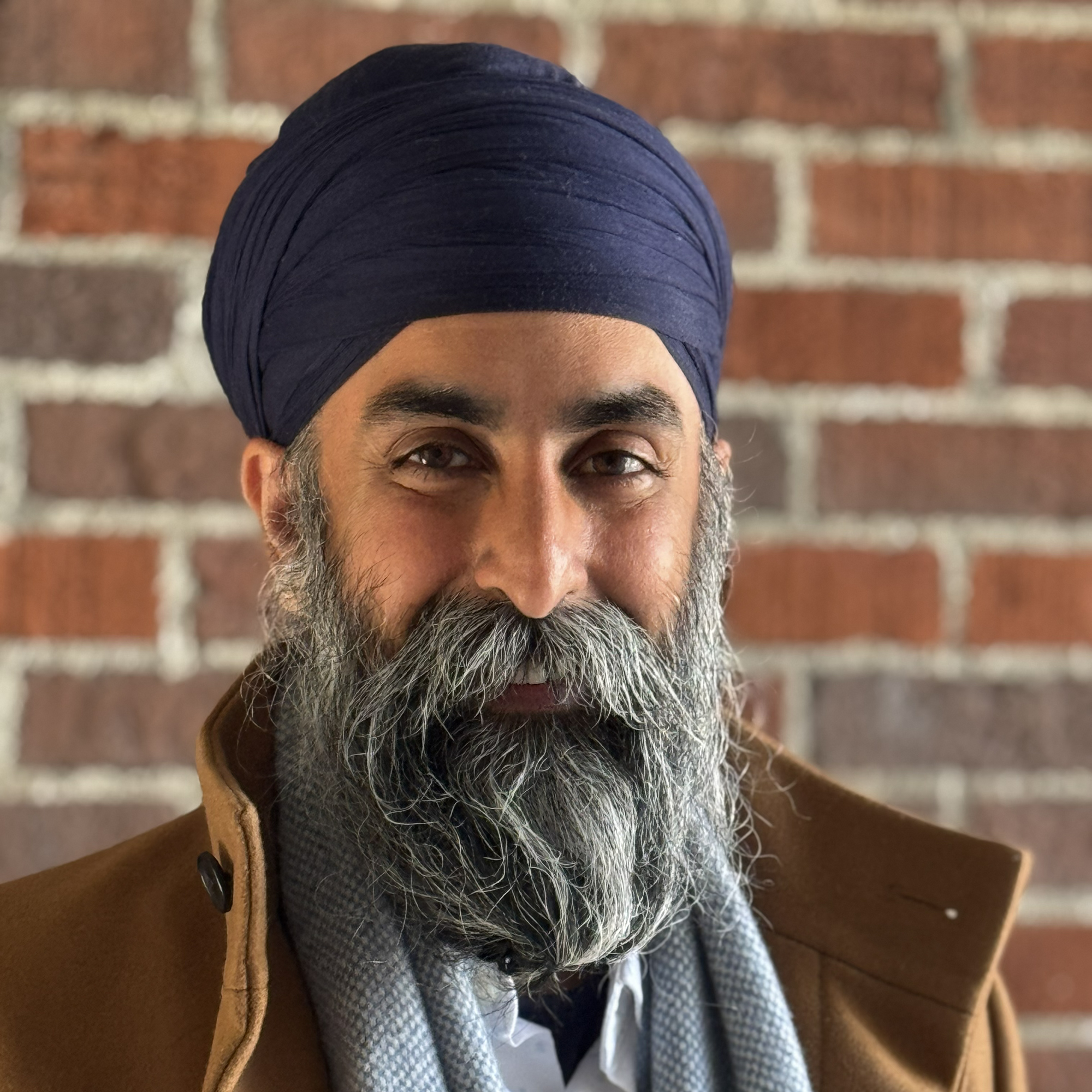
Photo courtesy of AmarAtma Singh Khalsa.
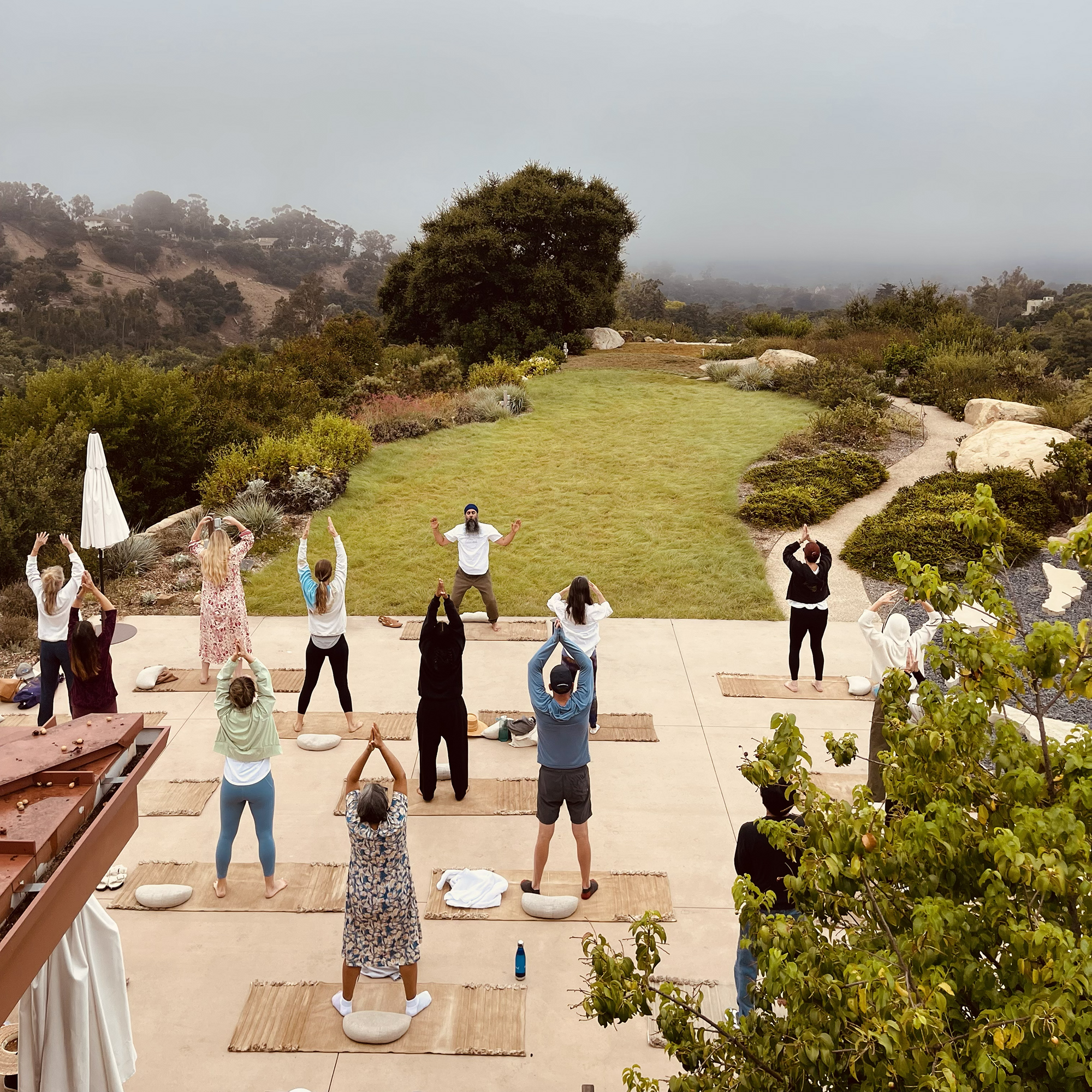
AmarAtma Singh Khalsa leads a group yoga practice, illustrating the embodied approach of his compassionate grieving model. Photo courtesy of AmarAtma Singh Khalsa.
“I saw how certain narratives, constructs, and myths we hold around grieving were causing difficulty for people,” said Khalsa, whose MRPL work is focused on further developing the Institute for Compassionate Grieving, which he founded in 2024. “I saw layers and layers of suffering, regardless of age, class, or culture.”
Moving into an outpatient role at the onset of the pandemic, Khalsa began developing his own curriculum of grief care, the “compassionate grieving model,” which combines Chinese medicine and acupuncture, mindfulness and movement techniques, and Sikh spiritual insights to form a holistic approach that reframes how people understand, experience, and move through grief. At the heart of the model is an emphasis on the body.
“The compassionate grieving model recognizes that we don’t only feel through our hearts and our minds; we actually feel through our bodies,” said Khalsa. “Whether manifesting as chest aches, digestive issues, alterations in sleep habits, or other symptoms, grief happens dynamically through the body.”
Along with pinpointing powerful ways grief is felt somatically, Khalsa also views the body as the fulcrum for transformation and healing. A key component of the model—what Khalsa calls “somatic relief for grief”—is a set of embodied, communal practices, including breathing exercises, Qigong, Tai Chi, yoga, and pranayama. These practices enable a reorientation in the relationship between people and their grief; they flip the dynamic, helping people feel larger and their emotions smaller, so they can meet grief with tenderness and compassion.
The compassionate grieving model is designed to help people unlearn misconceptions around grief—to create permission for people to grieve together without shame, allowing emotions to move through the body and opening up new spaces for healing.
“Grief is a story of love looking for a place to go,” said Khalsa. “We’re creating an opportunity to say grief is allowed to be here. We want to honor and recognize it because it’s love. We want to be a witness to those stories of love.”
From Restoration to Integration: Grief in Community
If the body is the fulcrum for a transformed relationship with grief, community is the vessel where bodies gather to honor, recognize, and support each other along the nonlinear journey of healing. With loneliness classified by medical experts as a public health concern, though, grief can often be reduced to an individual problem. According to Wilson Hood, MDiv ’19, a grief counselor at HopeHealth in Providence, Rhode Island, our society’s approach to grief often precludes genuine healing.
“We are a culture that does not do grief well,” said Hood. “We get grief wrong because we treat it like the cold. Look at most employee handbooks—you’ll likely see bereavement leave and sick days on the same page. We treat grief as something that you may do for a couple days, and then you’re all better. It’s a distorted view that causes harm.”
He labels this as a “restoration model of grief”: the notion that, after a short period of time, people can return to their life as usual, as though the loss they suffered never happened. He contrasts this with an “integration model,” which does not deny the loss, but helps people incorporate it into their lives.
“When I’m working with clients, I want to help them integrate the experience of loss into the rest of their lives,” said Hood. “It’s not about restoring a past version of ourselves that doesn’t exist anymore; it’s about integrating and living forward with it as part of who we are now.”
As Hood emphasizes, the work of integrating grief is best done in community. At HopeHealth, he provides counseling for individuals grieving the death of loved ones and bereavement support in a variety of group settings for children, adults, and the hospice center’s medical team. Though the group offerings are diverse, one major focus is on the spiritual wellness of the bereaved.
“Grief is relational; it’s a communal experience to be shared,” said Hood. “We focus on spiritual health as experiencing a sense of connection to self, others, and to that which is sacred—broadly defined and unique for each person. This encourages a sense of curiosity in the group, seeing the differences in another’s grief as important.”
These communal experiences also seek to honor the humanity of each participant and the love they shared with the deceased, encouraging openness and awe in response to their grief.
“If you love anything mortal, you will grieve,” said Hood. “And the grief will show up. The important thing is that we be good stewards of it in community and welcome it in ways that are life affirming and life giving.”
Grief is relational; it’s a communal experience to be shared.”
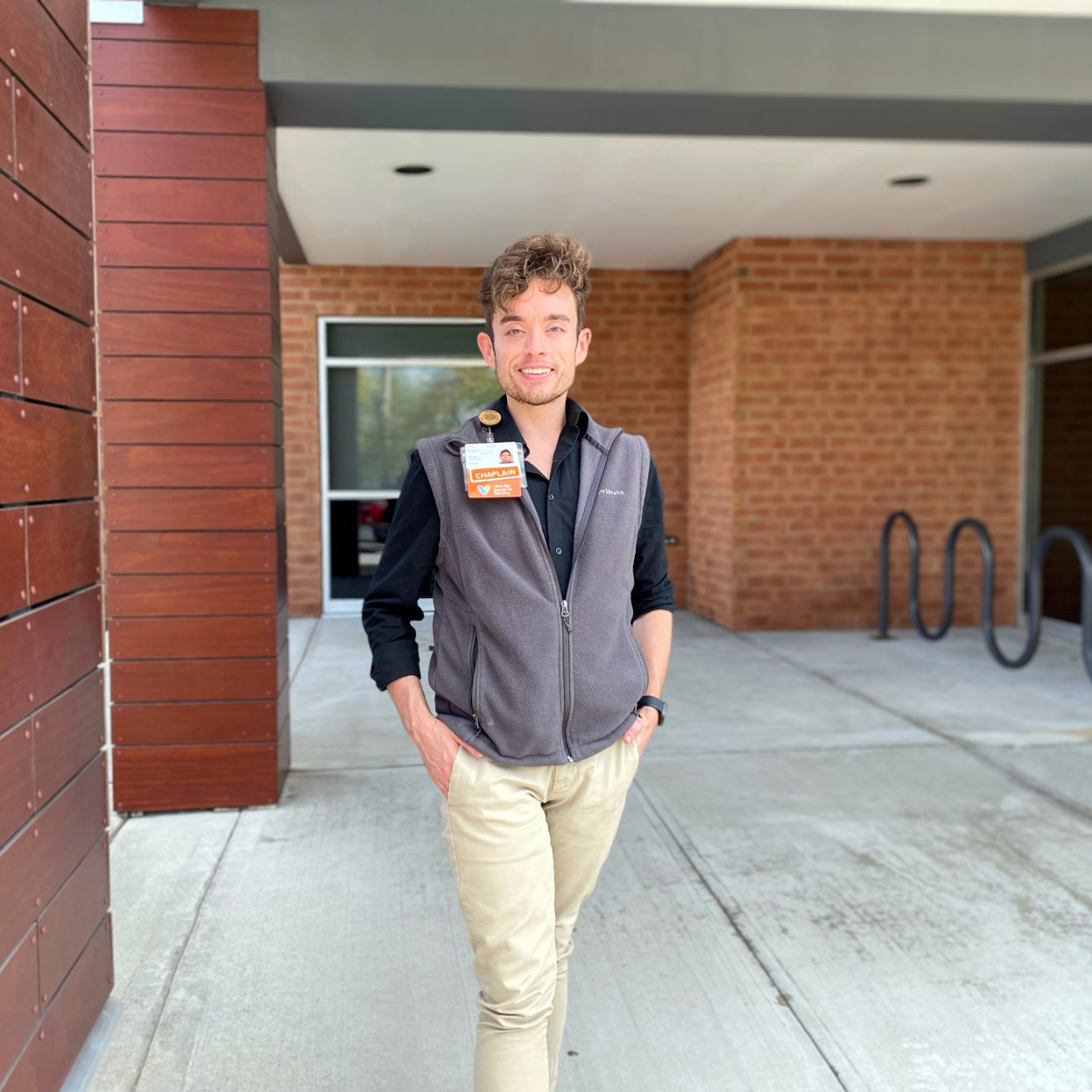
Photo courtesy of Wilson Hood.
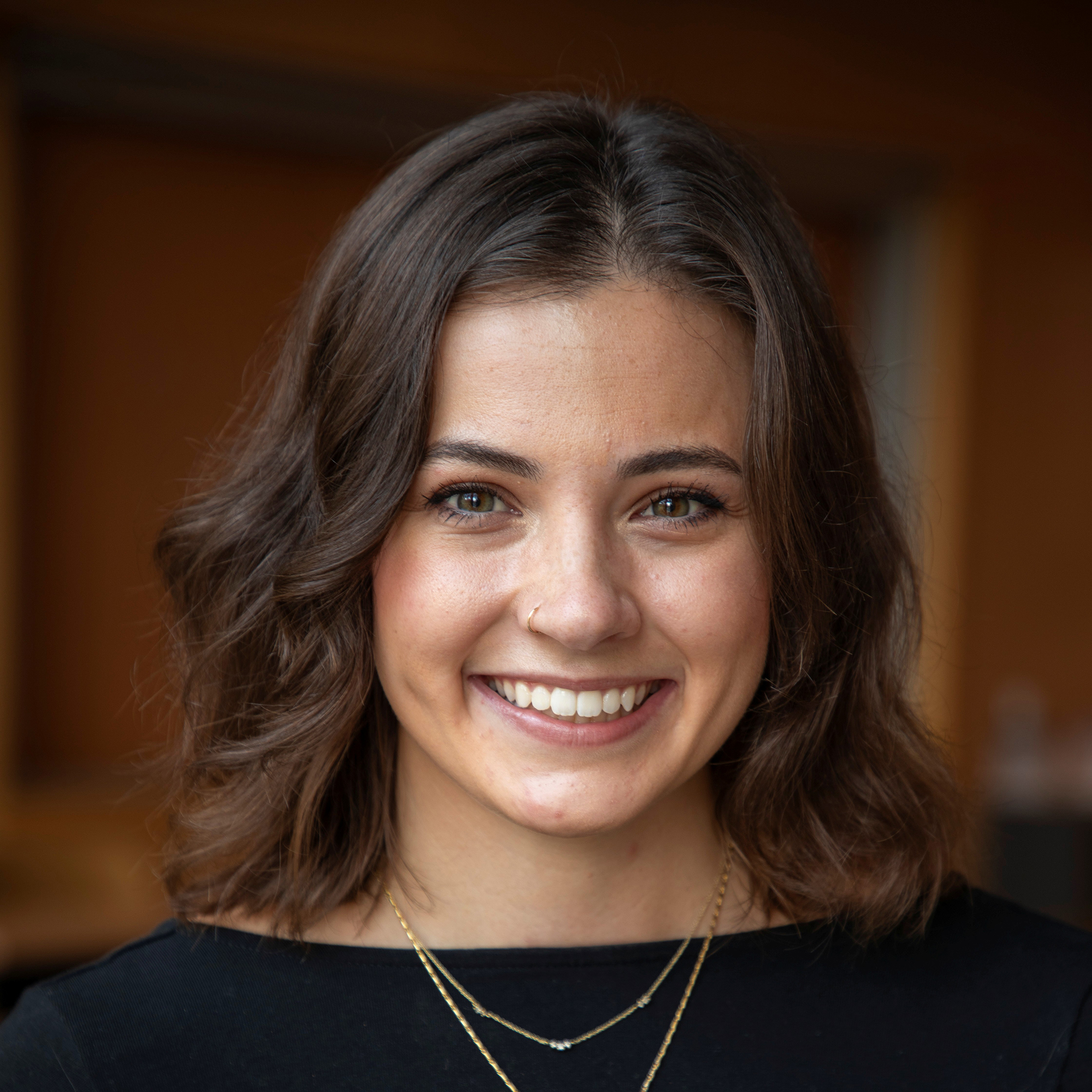
Photo courtesy of Julia Jackson.
Justice and Demystifying Deathcare
When a loved one dies, a critically important step toward integrating that loss is to move through collective rituals of grief. Through funerary rites, celebrations of life, and other ceremonies, the bereaved are given time and space to grieve deeply in community and to honor the life of their departed loved one. But this is contingent on access. In a profit-driven deathcare industry, the “business of dying” can create overwhelming financial burdens on grieving families that deepen the trauma of loss.
For Master of Divinity degree candidate Julia Jackson, who spent the summer of 2025 working with the Home Funeral Alliance (HFA), this is an urgent matter of justice.
“Few people realize they have options when a loved one dies,” said Jackson. “And there’s an economic justice aspect, too. Funerals are a multi-billion-dollar industry.”
While working with the HFA, Jackson helped the non-profit create more accessible pathways to at-home and community deathcare by advocating for more community-oriented legal guidelines at the state level. One key issue revolved around the work of death doulas who, in some states, can no longer provide care after the moment of death, which mandates that families must transition their care to the funeral home industry.
This academic year, Jackson serves as a chaplain intern at Boston Medical Center (BMC), tending to the spiritual needs of grieving families and helping them consider their best options for funerals. For her, this work of increasing access to lower cost alternatives and at-home care directly relates to bereaved people’s ability to fully grieve.
“If you are having to spend so much time thinking about funeral costs and setting up GoFundMe campaigns, it can really detract from the time to process and the space to grieve,” said Jackson.
So far at BMC, Jackson has revamped the hospital’s bereavement guide to include a more expansive catalogue of end-of-life options and has helped restart BMC’s “Compassionate Companions” program, a volunteer network designed to ensure that no one under the hospital’s care dies alone. Another important aspect of Jackson’s internship at BMC is work related to demystifying deathcare—helping people see death not as an abstract, medicalized moment, but a human process.
“We’re really alienated from death as individuals,” said Jackson. “It’s important that people have the chance to witness the human process of death and have the time to process and grieve.”
Grief and Meaning Making
While their methods, approaches, and contexts differ, Khalsa, Hood, and Jackson share a common foundation: the pedagogical and formational focus of HDS, which prepares future leaders to attend to complex grief across a range of vocations, caring for people from diverse backgrounds. For Laura Tuach, MDiv ’01, assistant dean of ministry studies and field education and Lecturer on Ministry, it is HDS’s multireligious identity that makes the School’s ministry formation so effective.
MDiv students engaged in field education enroll in a year-long course, “Meaning Making – Thinking Theologically about Ministry Experience.” As part of this class, students are placed within cohorts that facilitate intentional reflection on what they’re learning in the field.
“A big part of the work with students preparing for ministry is helping them be able to sit with people in the midst of suffering—to help them find the ground beneath their feet and the spiritual resources they need to go on and make sense of what’s just happened,” said Tuach.
Students have the opportunity to hear the way others are making meaning across different belief systems and worldviews, which will help them as ministry leaders.”
The cohorts are designed not only to help students help others in times of grief; they’re also created to strengthen students’ emotional resilience and capacity to hold the sorrow of others.
“This self-inquiry through theological and spiritual lenses, through therapy—if you’re engaging in reflective practices as a spiritual care provider, you’re less likely to do harm,” said Tuach.
A key reason for the effectiveness of these cohorts is their multireligious makeup. Students are placed within groups in which many different religious and spiritual traditions are operational as meaning-making resources.
“Students have the opportunity to hear the way others are making meaning across different belief systems and worldviews, which will help them as ministry leaders,” said Tuach. “Because no matter where and how they’re leading and caring, they will encounter people from all different backgrounds.”
By fostering this capacity to hold both personal sorrow and collective suffering, HDS is ensuring that whether in a trauma bay, a community of faith, or at a hospital bedside, the story of love that is grief has a place to go.

Photo by Marisol Andrade Muñoz.